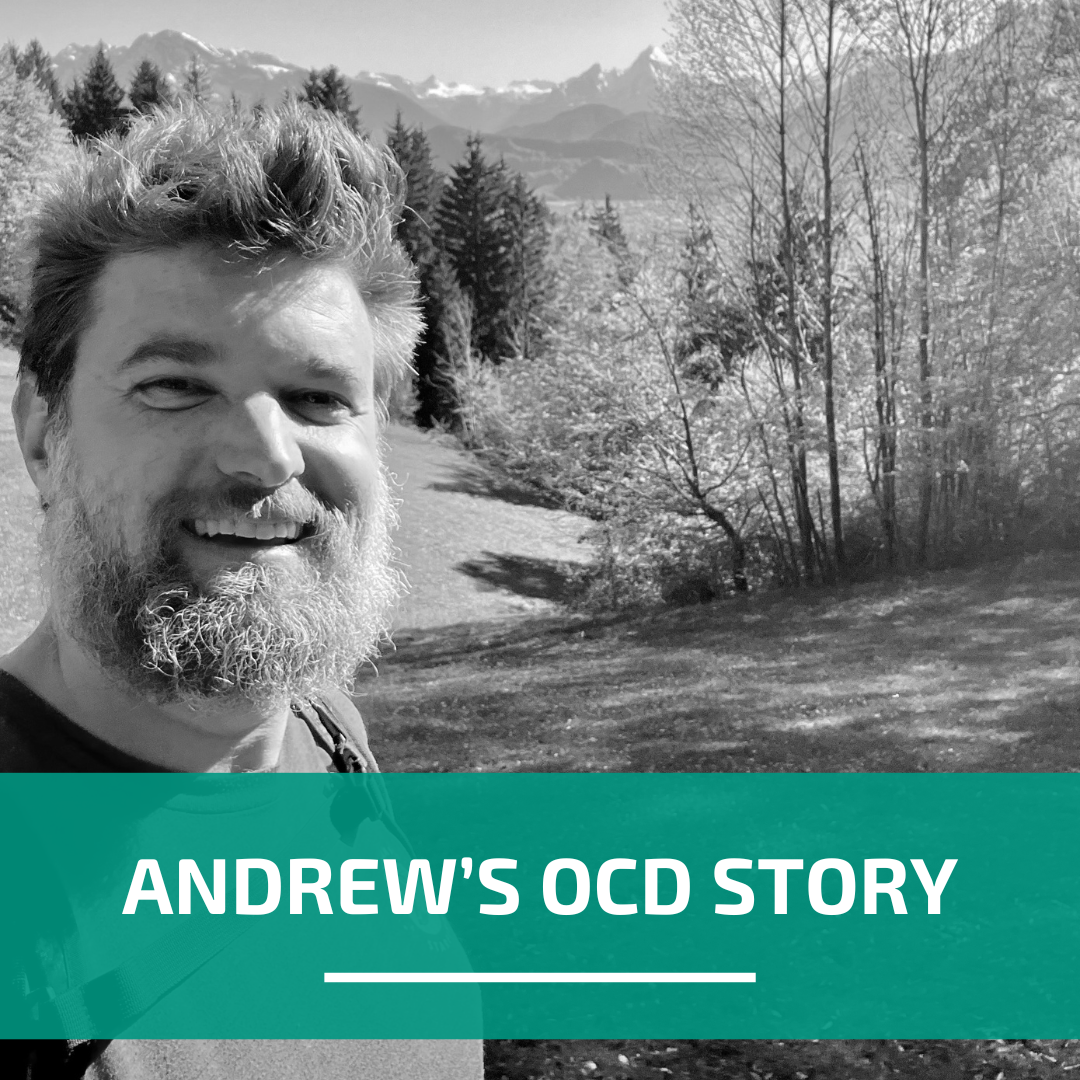
Andrew GottWorth (he/any) joined the Orchard Team and serves as the Communication & Community Coordinator. Here is Andrew’s OCD story:
Shooo…. I collect diagnoses like Pokémon. Over the years, I have been diagnosed with Generalized Anxiety Disorder, Depression, ADHD, BFRBs, and OCD. I certainly consider myself a mental health advocate overall, but why focus on OCD? Why become an IOCDF Advocate, organize OCD walks, write OCD blogs, promote OCD documentaries, and work for Orchard OCD?
I think Obsessive Compulsive Disorder is the most misunderstood of my diagnoses, was the most debilitating for me, and seems to have the least resources, representation, and general support.
That being said, the communities and organizations I have found in the OCD space are incredible! Growing up, I heard about depression, anxiety, and ADHD in school, in films, saw support lines on posters, saw t-shirts, awareness walks, etc. But it was only after my OCD diagnosis, and when I started seeking out resources, that I found wonderful OCD advocates, charities, non-profits and more.
I was diagnosed with depression and anxiety at age 19 in my freshman year of college. They both still kick my tail sometimes, but they come and go. OCD started for me probably at age 8 or 9, and grew and grew in its list of rules, demands, and weight/heaviness over the next 20 years. In my early 20s I was hospitalized 3 times with suicidal ideation. I dropped out of university, later dropped out of AmeriCorps, then “dropped out” as a summer camp counselor, and struggled immensely with everyday life.
For 10 years, I tried many different therapy models, saw many different therapists and psychiatrists, tried many different medications, diets, wellness tips and more. I was able to have some stability, finish college, get a job, get married, and go to grad school. But I still felt like I was barely holding on. I felt I was drowning in the ocean, would manage to kick to the surface, submit a paper, be a friend and partner, do a few chores, then go back to drowning.
I somehow survived grad school and got a job working for the state AmeriCorps Program, (now called Serve KY). I had a wonderfully supportive atmosphere, meaningful work, a therapist I liked, medication, loving family, loving wife, and stability, but I was still barely holding on. After a year or so, I voluntarily went from full time to part time. After a few months of part time, I was still so miserable every day that I resigned.
Then, luckily, I finally got my OCD diagnosis. How did so many therapists, psychiatrists, and in-patient clinics miss it? How did I miss it?
I think one, I didn’t have the language for what I was experiencing. Two, there was so much shame and stigma in the intrusive thoughts, that I was maybe not fully honest. And three, even wonderful therapists might not have had the nuanced training for OCD that is needed.
Until my late 20s, my understanding of OCD was that people were afraid of germs and liked things super organized. I, however, am frequently dirty and messy, so I didn’t think it applied to me. The ‘dark thoughts” I had, we assumed were depression. The “rules” I had to follow were just “quirks” or “idiosyncracies”. Only after diagnosis did I realize so many of my struggles fit into the framework of either intrusive thoughts and obsessions or things I felt I had to do (compulsions).
For the shame/stigma obstacle, I was too embarrassed for so long to talk about intrusive thoughts. Eventually when I was able to, I talked about my suicidal ideation. This was still hard, but maybe less shameful. I was struggling and still embarrassed by that, but not a “bad person”. I didn’t want to share that when I was younger and in church, that I had sexual intrusive thoughts. Or that when driving, I had flashes of running people over on the sidewalk. Or when I got older and married, that I had intrusive thoughts of cheating. Or when being a kids’ sports trainer, that I had thoughts of “oh no, what if I become like Larry Nassar, that gymnastics coach sex offender!”. Or after reading “You’ll be Gone in the Dark”, that I worried I’d become a serial killer!
All of that seemed too terrible to say out loud. Even now, over 7 years into therapy, it’s still difficult to type out. I just didn’t know that these thoughts are part of a known and treatable condition.
Which leads to the third reason for missing the diagnosis for 20 years. I am so so thankful for anyone who gets into the mental health profession to help people. Unfortunately, the preparation and training for some professionals seems inadequate. OCD is not just about being clean and tidy. It is so much more nuanced and complex. I wish everyone was better trained to spot the signs. Then, after being able to recognize that it is OCD, I wish everyone was better able to treat it.
Even after I was diagnosed with OCD, I still came across therapists that encouraged snapping a rubber band on my wrist when I had a bad thought, or imagining a stop sign. These are big red flags in seeking treatment! They only reinforce the OCD cycle – that these thoughts are bad, and if I have them, I should have a big anxious reaction to them.
It was only when I got proper Exposure and Response Prevention therapy (another blog about this soon!), with a supplement of mindfulness and acceptance, that I finally made progress. I am so thankful to organizations like Orchard and IOCDF, and the many incredible OCD advocates I have met, that are working to make the mental health landscape a better place, in order to:
- Help the public and clinicians better understand OCD
- Help people get earlier diagnoses
- Reduce stigma and shame
- Advance new research
- Build community and support each other
I am hoping to play my small part in that too!